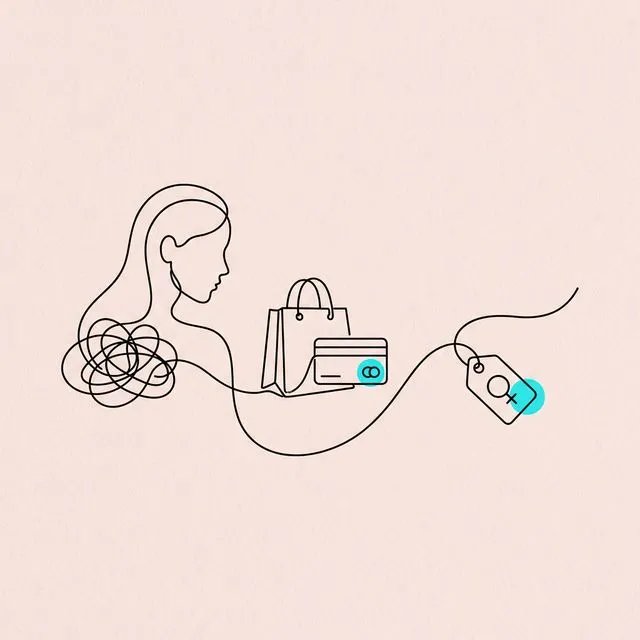
The Emotional Toll of Credit: Navigating the Pink Tax and Retail Therapy Trap
Explore how systemic financial pressures, targeted marketing, and the Pink Tax contribute to a unique credit card debt crisis for women, and how to fight back.
When we talk about credit card debt, the conversation often centers around interest rates, minimum payments, and budgeting apps. But for women, the mechanics of consumer debt are heavily intertwined with systemic societal pressures and aggressive, gendered marketing.
Statistically, women are more likely to carry an unpaid credit card balance month-to-month compared to men. To understand why, we have to look past simple “overspending” and analyze the unique financial landscape women navigate—a landscape shaped by the gender pay gap, the “Pink Tax,” and the psychological weaponization of retail therapy.
Systemic Hurdles: Why the Math is Harder
The mathematical reality is that women, on average, have less financial flexibility than men.
- The Wage Gap: Women working full-time earn roughly 81 cents for every dollar earned by their male counterparts. This smaller baseline income means a tighter monthly budget, making it harder to absorb financial shocks without swiping a credit card.
- The Pink Tax: Women frequently pay more for essential daily goods simply because they are marketed to females. From razors and shampoo to dry cleaning and services, this price discrimination acts as a subtle, pervasive drain on monthly cash flow.
When your baseline income is lower and your essential goods cost more, the margin for error is razor-thin. It is unsurprising that women more frequently turn to credit cards to bridge the gap for essential household and childcare expenses.
The Weaponization of “Retail Therapy”
Compounding these systemic issues is the aggressive psychological marketing that targets women.
In times of stress, “retail therapy” is culturally normalized and heavily marketed toward women as a legitimate form of self-care. Social media algorithms are exquisitely tuned to deliver frictionless purchasing opportunities precisely when users are feeling tired, stressed, or emotionally vulnerable.
This creates a dangerous cycle:
- Systemic Stress: Navigating workplace disparity, caregiving burdens, or the general fatigue of the modern economy causes immense stress.
- The Promised Cure: Targeted marketing presents a frictionless purchase (a skincare routine, an outfit, a home good) as a deserved act of “self-care.”
- The Reality of Debt: The purchase goes on a credit card. The momentary dopamine hit fades, replaced by the crushing anxiety of a growing, high-interest credit card balance. The debt itself then becomes the new source of stress, restarting the cycle.
Breaking the Cycle: A Strategic Approach
To fight back against systemic disadvantages and targeted marketing, women need aggressive, mathematical strategies designed for their specific reality.
1. Detach Emotion from Spending
Recognize when marketing is trying to exploit your exhaustion. “Self-care” often requires rest, boundaries, and time, not a $150 transaction on a credit card. When the urge for retail therapy hits, enforce a mandatory 48-hour waiting period before checking out any online cart.
2. Audit the Pink Tax
Actively combat gendered pricing. Buy the “men’s” razors. Compare prices on unisex basic hygiene products. Redirect those small, everyday savings directly into an emergency fund to create an authentic safety net against stress.
3. Aggressively Target the Debt
If you are carrying a balance, you must recognize that you are paying a massive premium (often 24% or higher) for the privilege of bridging your income gap with a bank’s money.
[!IMPORTANT] Reclaim Your Power: Stop letting credit card interest drain your wealth. Use our Debt Destroyer Calculator to mathematically align your payments using the Avalanche method, saving thousands in interest and accelerating your path to financial independence.
Credit card debt is not a moral failing—it is often the result of navigating a high-cost world with unequal resources. By recognizing the systemic traps, refusing the false comfort of retail therapy, and attacking the math head-on, you can protect your wealth and build true financial autonomy.
Disclaimer
This analysis is for educational purposes only and does not constitute financial advice. The models presented are projections based on historical data and specific assumptions that may not apply to your unique situation. Always consult with a certified financial professional.
Content on StashPlanner is created with the assistance of Artificial Intelligence. While we fact-check against high-authority sources, AI can occasionally hallucinate or get details wrong. Please use this content as a starting point and always conduct your own due diligence.