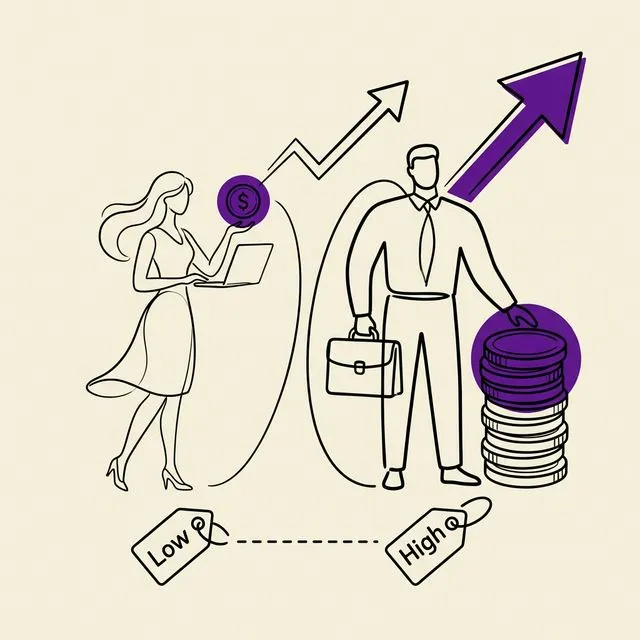
The Freelance Pay Gap: Why Women Earn 28% Less in the Gig Economy (and How to Fix It)
Explore the 28% freelance gender pay gap, the compounding cost of underpricing services, and strategic ways for female solopreneurs to build wealth.
The gig economy is frequently touted as a great equalizer—an opportunity to escape corporate glass ceilings and build a flexible career on your own terms. For many women, it offers a vital way to balance ambitious professional goals with disproportionate caregiving responsibilities.
However, the flexibility of self-employment often masks an uncomfortable truth: the gender pay gap doesn’t disappear when you become your own boss. In fact, in many sectors of the gig economy, the disparity actually widens.
The 28% Reality Check
While specific figures vary by region and industry, recent global data reveals that female freelancers earn approximately 28% less than their male counterparts. In high-paying technical fields, the gap can expand to over 35%.
This isn’t just about earning marginally less; it’s a compounding systemic issue that severely impacts long-term wealth accumulation for women.
Why does this gap persist outside the traditional corporate structure?
- The Underpricing Penalty: Studies show that a staggering 72% of women feel pressured to charge less for their freelance services, compared to only 41% of men. Women frequently enter the market with a lower “reservation wage”—the minimum acceptable rate for a project.
- Occupational Segregation: Algorithmic platform biases and societal conditioning often steer female freelancers toward traditionally lower-paying project categories, while steering men toward lucrative tech and consulting contracts.
- The Caregiving Time Tax: The flexibility that draws many women to gig work is often utilized to manage unpaid caregiving duties. Because women generally shoulder more unpaid labor, they log fewer billable hours, dramatically impacting their total earning potential.
The Compounding Cost of Underpricing
The true danger of the freelance pay gap isn’t just the immediate loss of income; it’s what that lost income represents over a lifetime.
When you consistently underprice your services by 28%, you aren’t just losing cash—you’re losing the opportunity cost of that cash. Every dollar you fail to negotiate is a dollar that cannot be invested in your retirement, cannot compound in the stock market, and cannot be used to pay your substantially higher self-employment taxes.
Furthermore, flat-rate platform fees and the aforementioned self-employment taxes take a proportionately larger bite out of smaller incomes. The math is brutal: earning less accelerates the wealth gap.
The Solution: Data-Driven Defense
To combat the freelance pay gap, female solopreneurs must abandon emotional pricing and rely strictly on math.
- Stop Charging “What Feels Fair”: Base your rates on a hard mathematical formula that accounts for your required salary, self-employment taxes, unbillable administrative time, and retirement contributions.
- Audit Your Real Hourly Rate: If you are charging $50 for a project but spending 5 unbillable hours communicating with the client, your real rate is catastrophic.
- Automate Your Safety Net: You must strategically separate your cash the moment it arrives. If you are already fighting a 28% deficit, you cannot afford the financial shock of an unexpected tax bill.
To build an autonomous safety net and ensure your rates actually cover your critical obligations, you need a precise allocation plan.
Take control of your cash flow today. Use our Gig Income Allocator to calculate precisely what percentage of every invoice must go to taxes and retirement, and ensure your rates are truly sustainable.
Disclaimer
This analysis is for educational purposes only and does not constitute financial advice. The models presented are projections based on historical data and specific assumptions that may not apply to your unique situation. Always consult with a certified financial professional.
Content on StashPlanner is created with the assistance of Artificial Intelligence. While we fact-check against high-authority sources, AI can occasionally hallucinate or get details wrong. Please use this content as a starting point and always conduct your own due diligence.