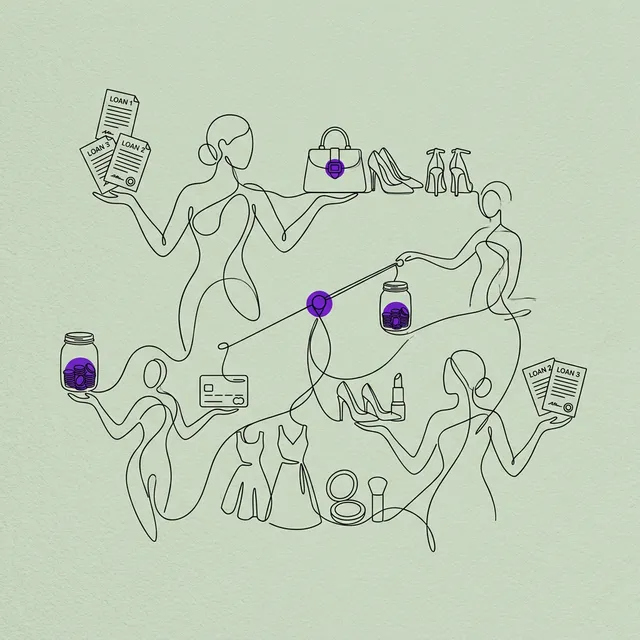
The BNPL Trap: How the Pink Tax and Wage Gap Are Fueling a Debt Crisis for Women
Women are using Buy Now, Pay Later services at a nearly 42% higher rate than men. Explore the mathematical connection between the wage gap and BNPL reliance.
The “Buy Now, Pay Later” (BNPL) industry is booming, but behind the sleek checkout buttons lies a stark demographic reality. Recent data shows that women are 41.7% more likely to use BNPL services than men, with women comprising 68% of frequent BNPL users in some markets. This isn’t just about shopping habits—it’s a mathematical symptom of broader systemic issues: the wage gap and the Pink Tax.
At a Glance: Women and BNPL
- Why are women using BNPL more? The persistent gender wage gap means women often have less disposable income, making the “Pay in 4” model an attractive necessity rather than a pure convenience.
- How does the Pink Tax factor in? Everyday products marketed to women (from razors to clothing) cost more. BNPL masks these inflated costs by breaking them into smaller, seemingly manageable payments.
- What is the long-term risk? BNPL rarely builds credit history. Relying on BNPL instead of traditional credit can leave women with thinner credit files, impacting their ability to secure favorable mortgage or auto loan rates in the future.
The Mathematics of the Wage Gap and Micro-Loans
The gender wage gap is well-documented, with women earning roughly 84 cents for every dollar a man earns. When your baseline income is lower, your margin for error—and your disposable income—is significantly reduced.
BNPL services thrive precisely within these tight margins. A $200 purchase might represent a massive hit to a single paycheck for someone earning a lower wage, but splitting it into four $50 payments makes it mathematically feasible in the short term. However, this relies on tapping into future earnings to subsidize current needs, a dangerous cycle when income is already constrained.
Statistics show that 72.6% of overall BNPL users earn less than $75,000 annually. For women navigating the wage gap, BNPL acts as an unsecured credit line that bridges the gap between their income and their expenses.
The Pink Tax in 4 Easy Installments
The “Pink Tax” is the phenomenon where products and services geared toward women cost more than their male equivalents. From dry cleaning to personal care products, women face an inflated cost of living simply based on gender marketing.
How does BNPL intersect with this? BNPL is heavily integrated into the beauty and fast-fashion industries—sectors with pronounced Pink Taxes. By breaking a high-priced skincare routine or professional wardrobe essential into fractional payments, companies successfully mask the sting of gender-based pricing. It tricks the brain: you aren’t paying a $30 premium; you’re only paying $7.50 today.
The Invisible Credit Problem
One of the most insidious aspects of BNPL for women’s financial independence is its impact on credit scores—or rather, its lack of impact.
Traditional credit cards, when paid on time, actively report to credit bureaus, building a robust credit history. BNPL services, however, largely do not report positive payment histories. Yet, if you miss a BNPL payment, it will be sent to collections and severely damage your score.
For women, building independent credit is crucial. A strong credit score is the key to securing lower interest rates on mortgages, auto loans, and business lines of credit. By replacing credit card usage with BNPL, women are systematically missing out on the opportunity to build their financial resumes.
Taking Back Control of Your Cash Flow
Breaking reliance on BNPL requires confronting both the math and the psychology of spending.
- Stop the Cycle of Escrow: Treat your checking account like a business. Every active BNPL loan is a lien against your future paycheck.
- Audit the Pink Tax: Actively seek out gender-neutral products (shaving cream, basic apparel) to reduce underlying costs before deciding if financing is necessary.
- Calculate the True Cost: Use our Buy Now Pay Later Affordability Calculator to see exactly how multiple overlapping “Pay in 4” schedules are draining your monthly liquidity.
Conclusion
BNPL isn’t inherently evil, but it is a tool that disproportionately exploits the financial tightrope many women are forced to walk. Recognizing the connection between the wage gap, the Pink Tax, and the allure of installment payments is the first step toward reclaiming true financial independence.
Disclaimer
This analysis is for educational purposes only and does not constitute financial advice. The models presented are projections based on historical data and specific assumptions that may not apply to your unique situation. Always consult with a certified financial professional.
Content on StashPlanner is created with the assistance of Artificial Intelligence. While we fact-check against high-authority sources, AI can occasionally hallucinate or get details wrong. Please use this content as a starting point and always conduct your own due diligence.