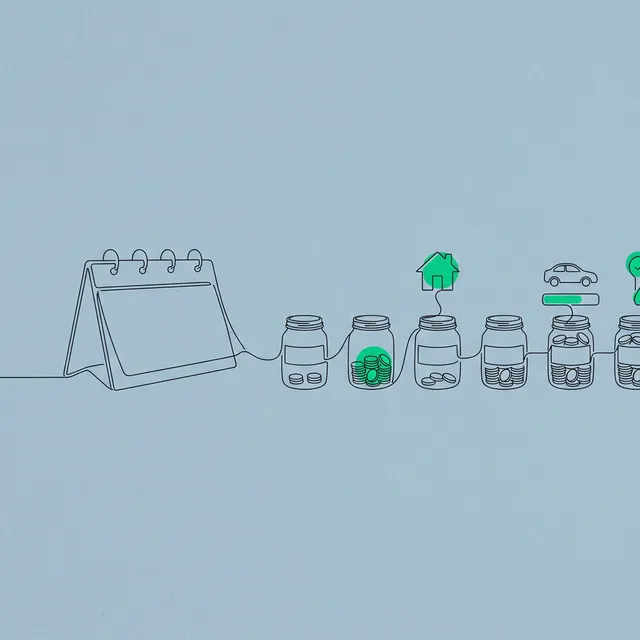
The Sinking Fund Strategy: Master Your Annual Expenses
Stop relying on credit cards for expected expenses. Learn the math behind sinking funds and how to automate saving for big annual bills.
Have you ever been blindsided by your car registration fee or holiday shopping, even though they happen at the same time every year? You’re not alone. When we rely solely on monthly budgets, predictable annual expenses can feel like emergencies.
The Sinking Fund Strategy flips the script, helping you budget for large, expected expenses without blowing your monthly cash flow.
What is a Sinking Fund?
A sinking fund is a strategic savings account dedicated to a specific, anticipated future expense. Rather than trying to cover the entire cost at once when the bill arrives, you set aside a small, manageable amount every month.
Unlike an emergency fund—which exists for unexpected disasters like a massive medical bill or a sudden layoff—a sinking fund is designed to be depleted for a planned purchase.
Common Sinking Fund Categories:
- Annual Insurance Premiums (Home, Auto, Life)
- Property Taxes
- Holiday Gifts
- Vehicle Maintenance & Tires
- Vacation & Travel Funds
- Home Repairs (e.g., HVAC service)
The Math Behind the Strategy
The calculation is straightforward: Total Estimated Cost ÷ Months Until the Bill = Monthly Contribution
Let’s say you spend $1,200 on holiday gifts every December. If you wait until November to start thinking about it, you’ll scramble to cash flow $1,200 out of your last two paychecks or, worse, rely on a credit card charging 24.99% APR.
With a sinking fund, you start in January. You divide $1,200 by 12 months, resulting in a strict contribution of $100 per month. By December, the money is fully available, rendering the holiday season financially stress-free.
Why This System Works Let’s Talk Psychology
- Prevents New Debt: By proactively saving, you won’t rely on a credit card when the annual insurance bill arrives.
- Reduces Decision Fatigue: Sinking funds provide a structured approach to your goals, giving clarity to each dollar’s purpose.
- Protects Your Emergency Fund: You’ll no longer raid your crisis reserves for an expected car repair.
Actionable Steps to Implement Today
- List Expected Costs: Identify every annual or bi-annual bill coming up in the next 12 months.
- Calculate the Monthly Target: Divide each total by the number of months until it’s due.
- Automate It: Create distinct savings sub-accounts and set up automatic transfers corresponding to payday.
- Track It: Monitor your progress and prioritize this in your overall budget.
Your budget should be a complete picture of your financial life. If you’re ready to incorporate sinking funds safely into your broader 50/30/20 strategy, use our Budget Planner to find the perfect allocation for your goals!
Disclaimer
This analysis is for educational purposes only and does not constitute financial advice. The models presented are projections based on historical data and specific assumptions that may not apply to your unique situation. Always consult with a certified financial professional.
Content on StashPlanner is created with the assistance of Artificial Intelligence. While we fact-check against high-authority sources, AI can occasionally hallucinate or get details wrong. Please use this content as a starting point and always conduct your own due diligence.