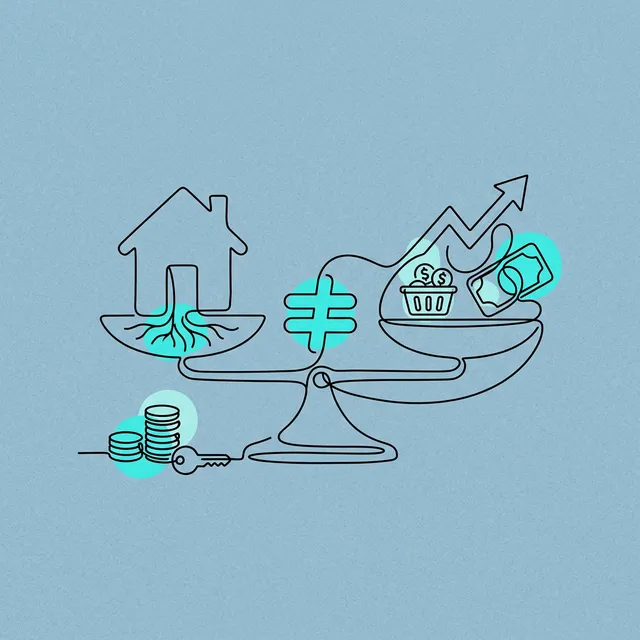
Rent vs. Buy: The True Math Behind Home Ownership
Stop believing the myth that 'renting is throwing money away.' We break down the unrecoverable costs of buying and why the math might surprise you.
“Renting is throwing money away.”
It’s the most common advice in personal finance—and for many people, the most expensive lie they will ever believe. The logic seems sound: Why pay a landlord when you could be paying yourself?
But buying a home isn’t just about the mortgage payment. It’s about the Unrecoverable Costs—money that leaves your pocket and never comes back. When you do the real math, renting is often the smarter financial move.
The Myth of “Building Equity”
When you pay rent, 100% of that money is an unrecoverable cost. You pay for shelter, you get shelter. Simple.
When you pay a mortgage, you assume you are “building equity.” But in the first few years of a 30-year mortgage, the vast majority of your payment goes to Interest, not Principal.
- Interest: Unrecoverable cost (paid to the bank).
- Property Taxes: Unrecoverable cost (paid to the government).
- Homeowners Insurance: Unrecoverable cost (paid to the insurer).
- Maintenance: Unrecoverable cost (paid to the plumber/roofer).
If these costs add up to more than your monthly rent, you aren’t building wealth—you’re just paying a different set of landlords.
The Phantom Costs
Hidden costs are the silent killers of wealth. In 2025, the average homeowner spent over $8,000 annually on maintenance alone. That’s a new HVAC system, a roof repair, or a water heater failure that renters never have to worry about.
Add in closing costs (2-5% of the purchase price) and selling costs (6% agent fees), and the “break-even” timeline for buying a home has stretched from 5 years to nearly 8-10 years.
The Opportunity Cost of Your Down Payment
Here is the variable most people ignore. Let’s say you have $50,000 saved for a down payment.
- Option A (Buy): You lock that $50k into a house. It grows with the property value (historically ~3-4% per year).
- Option B (Rent): You invest that $50k in a low-cost index fund. It has historically grown at ~8-10% per year.
Over 30 years, that difference in compound interest is massive. By tying up your cash in illiquid real estate, you miss out on the market’s most powerful wealth-building engine.
The 5% Rule
A quick rule of thumb to check if buying makes sense: If (Price of Home x 5%) / 12 is less than your monthly rent, buying might be a good deal. If it’s more, renting is likely better.
- Example: $500,000 Home.
- $500k x 5% = $25,000 / year
- $25,000 / 12 = $2,083 / month
- If you can rent a comparable home for less than $2,083, renting wins.
Run Your Own Numbers
Don’t guess with your biggest financial decision. The math is local, personal, and nuanced.
Use our Rent vs. Buy Calculator to input your specific rent, home price, and down payment to see exactly which path builds more wealth for you.
Conclusion
A home can be a great place to live, but it isn’t always a great investment. Don’t rush into ownership because of peer pressure or outdated advice. Sometimes, the smartest homeowner is the one who decides to keep renting.
Disclaimer
This analysis is for educational purposes only and does not constitute financial advice. The models presented are projections based on historical data and specific assumptions that may not apply to your unique situation. Always consult with a certified financial professional.
Content on StashPlanner is created with the assistance of Artificial Intelligence. While we fact-check against high-authority sources, AI can occasionally hallucinate or get details wrong. Please use this content as a starting point and always conduct your own due diligence.