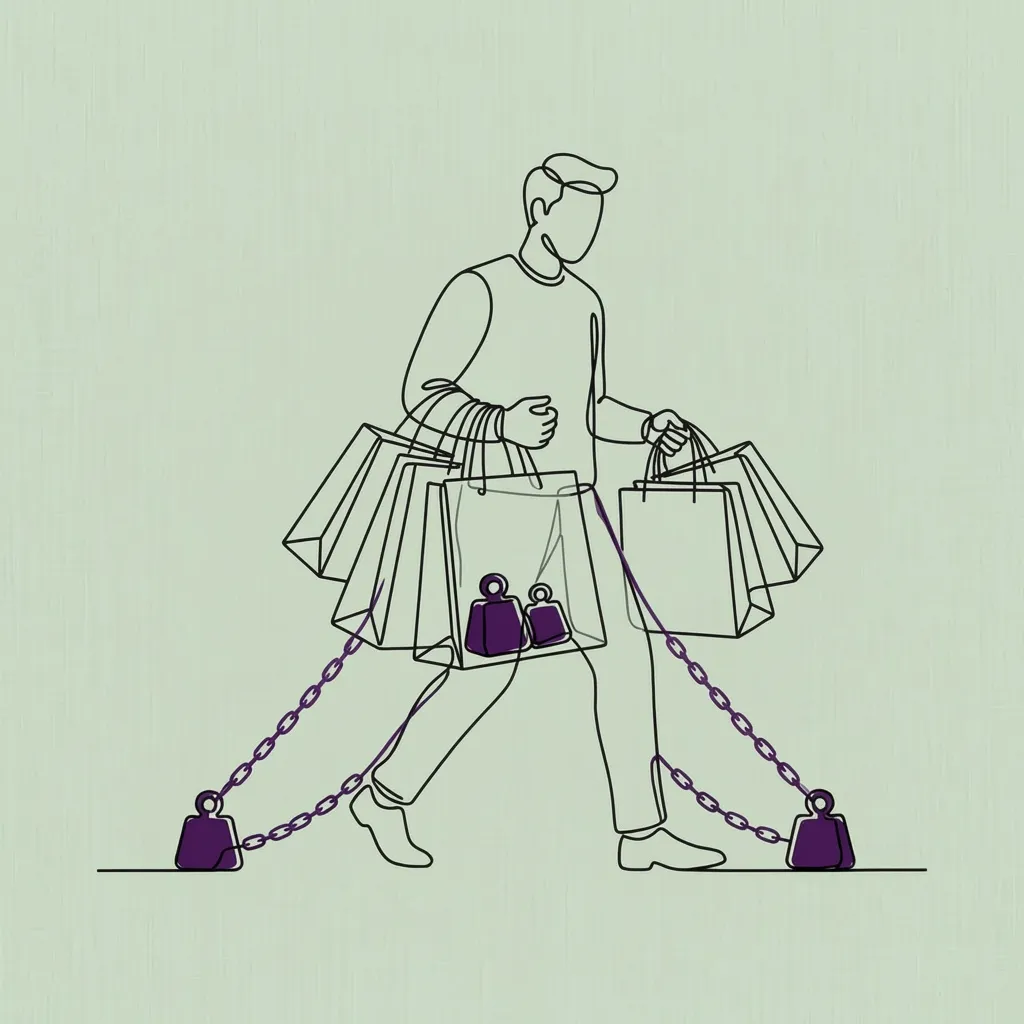
The Hidden Cost of "Buy Now, Pay Later" (BNPL)
BNPL services promise interest-free payments, but hidden risks like "phantom debt" and psychological spending traps can derail your finances. Here's the true cost.
It’s the checkout option that’s taken the online shopping world by storm: “Pay in 4 interest-free installments.” Why pay $200 today when you could pay $50 today and worry about the rest later?
Buy Now, Pay Later (BNPL) services like Affirm, Klarna, and Afterpay have exploded in popularity, marketed as a smarter, friendlier alternative to credit cards. And on the surface, they seem harmless—often zero interest, no hard credit check, and instant approval.
But if it sounds too good to be true, your financial intuition is right. The cost of BNPL isn’t usually in the interest rate; it’s in the behavior it encourages and the valid risks it hides.
The Psychology of Overspending
The genius of BNPL isn’t financial; it’s psychological. By breaking a large price tag into smaller, digestible chunks, these services create an illusion of affordability.
A $400 jacket feels expensive. A $100 payment feels like a steal.
This decoupling of the “pleasure of purchase” from the “pain of payment” is a known behavioral economic trigger. Without the immediate sting of the full price leaving your bank account, you are statistically more likely to:
- Spend more per transaction: Average order values skyrocket when BNPL is an option.
- Buy things you don’t need: The friction of decision-making is removed.
- Lose track of your budget: Four payments of $25 here, three payments of $50 there—suddenly, your monthly cash flow is eaten up by micro-debts.
The “Phantom Debt” Danger
For years, one of the biggest risks of BNPL was that it lived in the shadows. Unlike credit cards or mortgages, most BNPL loans were not reported to the major credit bureaus. This created a phenomenon known as “Phantom Debt”.
Lenders couldn’t see your true debt-to-income ratio, meaning you could stack multiple BNPL loans on top of credit card debt and a car loan without anyone (including yourself) realizing you were insolvent until it was too late.
While this is changing in 2025 and 2026 with new reporting standards from FICO and stricter regulations from the CFPB, the habit of “stacking” loans remains a primary cause of financial stress for young adults.
When “Free” Becomes Expensive
BNPL is only free if you are perfect. But life isn’t perfect.
If you miss a payment, the consequences can be severe:
- Late Fees: These can add up quickly, essentially acting as a high-interest rate in disguise.
- Deferred Interest: Some “0% interest” offers have clauses that retroactively charge interest on the entire original amount if you fail to pay off the balance by the end of the term.
- Credit Score Damage: Now that reporting is becoming standard, a missed BNPL payment can tank your credit score just like a missed credit card payment.
Check Your Affordability Before You Click
Before you split that next purchase, ask yourself: If I can’t afford to pay for this in full today, can I really afford to pay for it next month?
Use our tools to run the numbers:
- BNPL Affordability Calculator: See how those small installments actually impact your monthly budget.
- BNPL vs. Credit Card Comparison: Determine if you’re actually saving money or just kicking the can down the road.
The Better Alternative: Sinking Funds
The antidote to the BNPL trap is the Sinking Fund. Instead of buying now and paying later, you save now and buy later.
It sounds old-fashioned, but paying in full offers a psychological benefit that BNPL can never match: Peace of Mind. When you own the item 100% from day one, you enjoy it without the lingering shadow of future payments.
Disclaimer
This analysis is for educational purposes only and does not constitute financial advice. The models presented are projections based on historical data and specific assumptions that may not apply to your unique situation. Always consult with a certified financial professional.
Content on StashPlanner is created with the assistance of Artificial Intelligence. While we fact-check against high-authority sources, AI can occasionally hallucinate or get details wrong. Please use this content as a starting point and always conduct your own due diligence.