BNPL vs. Credit Cards: Which is Actually Cheaper in 2026?
A mathematical breakdown comparing Buy Now, Pay Later services with traditional credit cards. Find out which payment method truly costs less in 2026.
With Buy Now, Pay Later (BNPL) services surging to a projected $127.9 billion market in the U.S. this year, and traditional credit card interest rates hovering around 24%, consumers are facing a critical choice at checkout: which financing method is actually cheaper? While BNPL often advertises 0% interest, the true cost of debt goes beyond the sticker price.
At a Glance: BNPL vs. Credit Cards
- Which is cheaper? BNPL is cheaper only if you pay all four installments on time. If you carry a balance month-to-month, credit cards are heavily penalized with compounding interest, but late BNPL fees can quickly equate to a massive APR.
- Do they build credit? Credit cards actively build your credit history when paid on time. Most BNPL services do not consistently report positive payments, but they will report missed payments, damaging your score.
- What are the hidden dangers? BNPL encourages “loan stacking”—juggling multiple micro-loans at once—which leads to a high rate of missed payments and late fees.
The Math Behind “0% Interest” BNPL
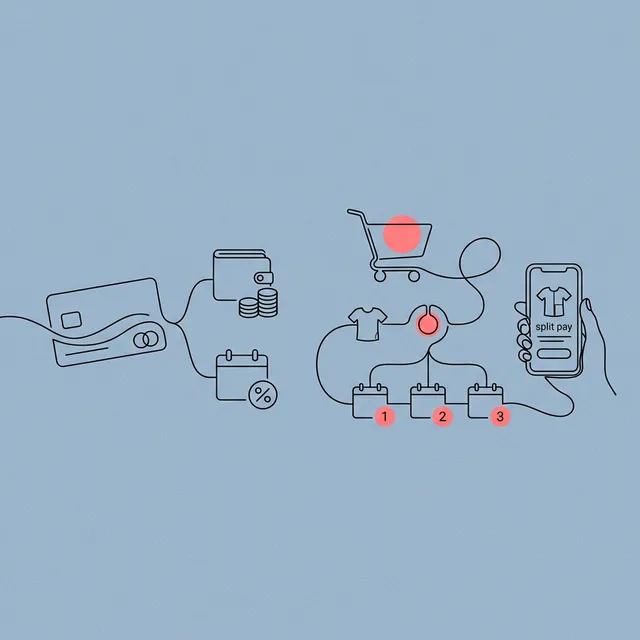
The appeal of BNPL, such as Klarna, Afterpay, or Affirm, is the standard “Pay in 4” model. You split a $200 purchase into four $50 payments over six weeks, and as long as you make those payments, the service charges you exactly $0 in interest.
However, the BNPL business model relies heavily on human error. In 2024, nearly 25% of BNPL users missed a payment. When you miss a payment, late fees kick in. While an $8 penalty fee might sound small, mathematically, it functions like an astronomical APR on a micro-loan.
For example, if you miss a $25 installment and are charged an $8 late fee, you have effectively paid a 32% penalty on that portion of the balance in a single week.
The Credit Card Reality in 2026
Traditional credit card APRs remain historically high, averaging near 23.99%. If you carry a balance, credit cards are mathematically devastating due to compound interest.
However, if you are among the consumers who pay their statement balance in full every month, credit cards are the superior financial tool.
- Zero Interest: Paid-in-full balances accrue no interest.
- Rewards: You earn 1% to 5% cash back or travel points on purchases.
- Protection: Credit cards offer robust consumer protections, extended warranties, and fraud liability protection that BNPL services are only just beginning to implement via new 2026 regulations.
The Danger of “Loan Stacking”
The hidden cost of BNPL isn’t the interest rate—it’s the psychological impact on your cash flow. Because BNPL splits payments, it tricks your brain into thinking you have more disposable income than you actually do.
This leads to “loan stacking.” You buy a sweater with Pay in 4. Then a week later, you buy concert tickets with Pay in 4. Suddenly, your checking account is being drained by multiple overlapping payment schedules every week, increasing the likelihood of an overdraft or a missed payment.
Which Should You Choose?
Use a Credit Card If:
- You pay your balance in full every single month.
- You want to build your credit score.
- You want the cash back rewards or purchase protections.
Use BNPL If:
- You have a firm budget and absolute certainty you can hit the four payment dates without stacking other loans.
- You do not have a credit card and want to avoid high-interest borrowing for an essential purchase.
If you’re struggling to calculate the true cost of your current payment plans, use our Payment Compare Calculator to see exactly how your choices are impacting your bottom line.
Conclusion
Both BNPL and credit cards are financial tools, and like any tool, their cost depends on how the user handles them. By understanding the math—and avoiding the psychological trap of easy monthly payments—you can ensure that you’re minimizing your debt and keeping more of your hard-earned money.
Disclaimer
This analysis is for educational purposes only and does not constitute financial advice. The models presented are projections based on historical data and specific assumptions that may not apply to your unique situation. Always consult with a certified financial professional.
Content on StashPlanner is created with the assistance of Artificial Intelligence. While we fact-check against high-authority sources, AI can occasionally hallucinate or get details wrong. Please use this content as a starting point and always conduct your own due diligence.